


What is HVAC and How Does an HVAC System Work?
May 11, 2026
You use it every single day, but chances are you have never actually seen most of it. Your HVAC system quietly hides behind walls, above ceilings, and tucked away in closets or your basement. All you know is that you touch a thermostat and your home gets warm or cool. That is honestly all most homeowners ever need to know.
But understanding the basics of how your HVAC system works can save you money, help you spot problems early, and make you a smarter consumer when it comes time to repair or replace equipment. This guide will walk you through everything in plain language, no technical background required.
What Is HVAC?
HVAC stands for Heating, Ventilation, and Air Conditioning. It is the umbrella term for all the equipment in your home that controls temperature, airflow, and air quality. When someone says "HVAC system," they are not talking about a single machine. They are talking about a network of equipment that works together.
Think of it like your home's circulatory system. Just like your heart, lungs, and blood vessels all play different roles to keep your body running, your HVAC system has different components that each do a specific job. When every piece is working well, you barely notice it. When something goes wrong, you feel it immediately.
The three letters break down like this:
- Heating keeps your home warm in winter using a furnace, boiler, or heat pump.
- Ventilation moves air through your home, filters it, and brings in fresh air from outside.
- Air Conditioning removes heat from inside your home and releases it outside to keep you cool in summer.
The Main Parts of an HVAC System
Before we get into how everything works together, it helps to know what you are dealing with. Here are the key players in a typical home HVAC system.
The Thermostat
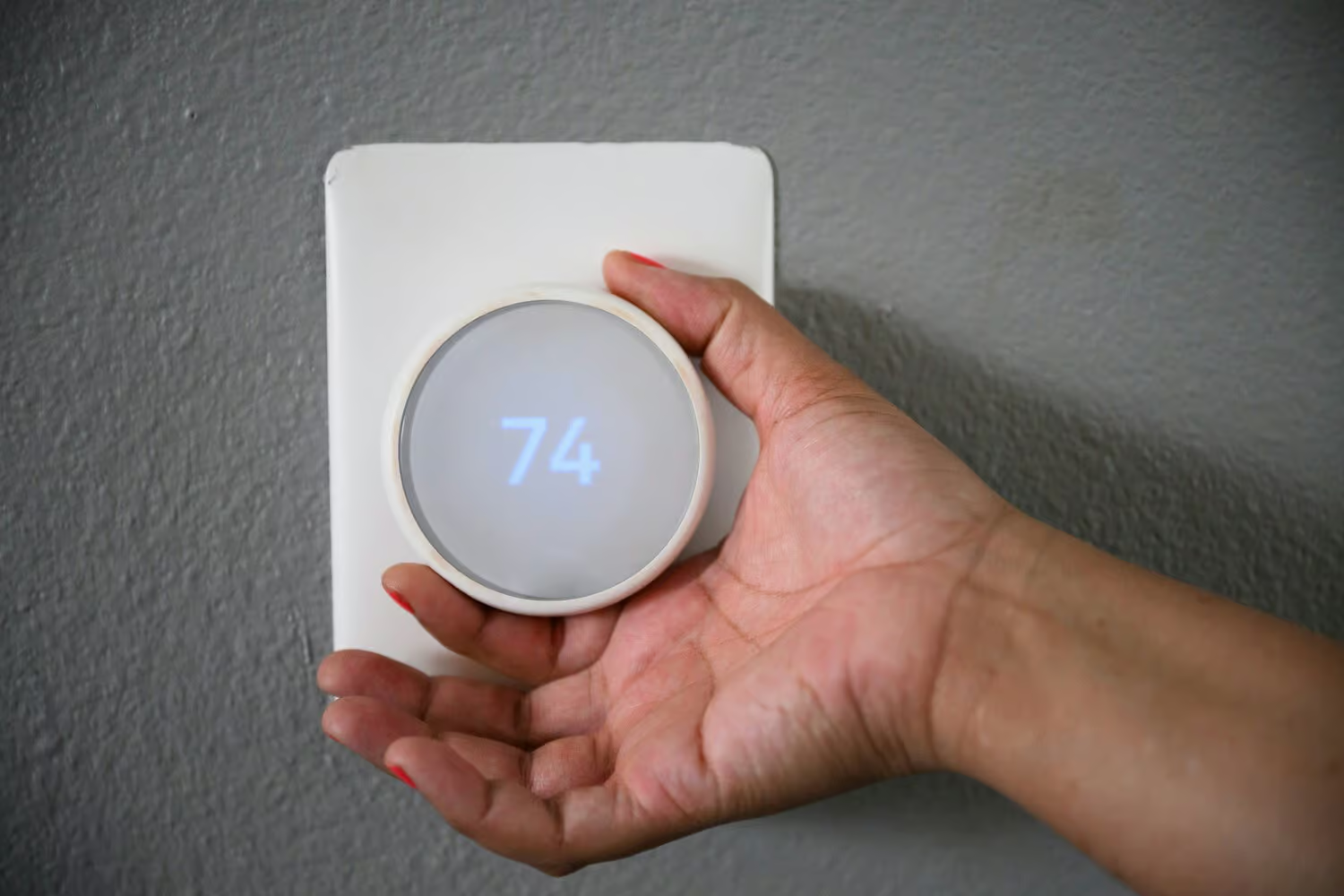
This is the only part of your HVAC system you actually touch on a daily basis. It sits on your wall, reads the current temperature in your home, and tells the rest of the system when to kick on and when to shut off. If you set it to 72 degrees, the thermostat notices when the temperature drifts too far above or below that number and sends a signal to your heating or cooling equipment to correct it.
Modern smart thermostats can learn your schedule and adjust automatically, which can meaningfully reduce your energy bills without you doing anything extra.
The Furnace
The furnace is the heating engine of most homes. It burns natural gas or propane (or uses electricity) to generate heat, then a blower fan pushes that warm air through your ductwork and out into your rooms. Furnaces are typically large metal boxes found in a basement, utility closet, attic, or garage.
Inside a furnace, there is a component called a heat exchanger. Combustion gases heat the exchanger, and the air in your home flows across it without ever mixing with those gases. This is an important safety feature. When a heat exchanger cracks, it can allow carbon monoxide to enter your living space, which is why annual furnace inspections matter.
The Air Conditioner
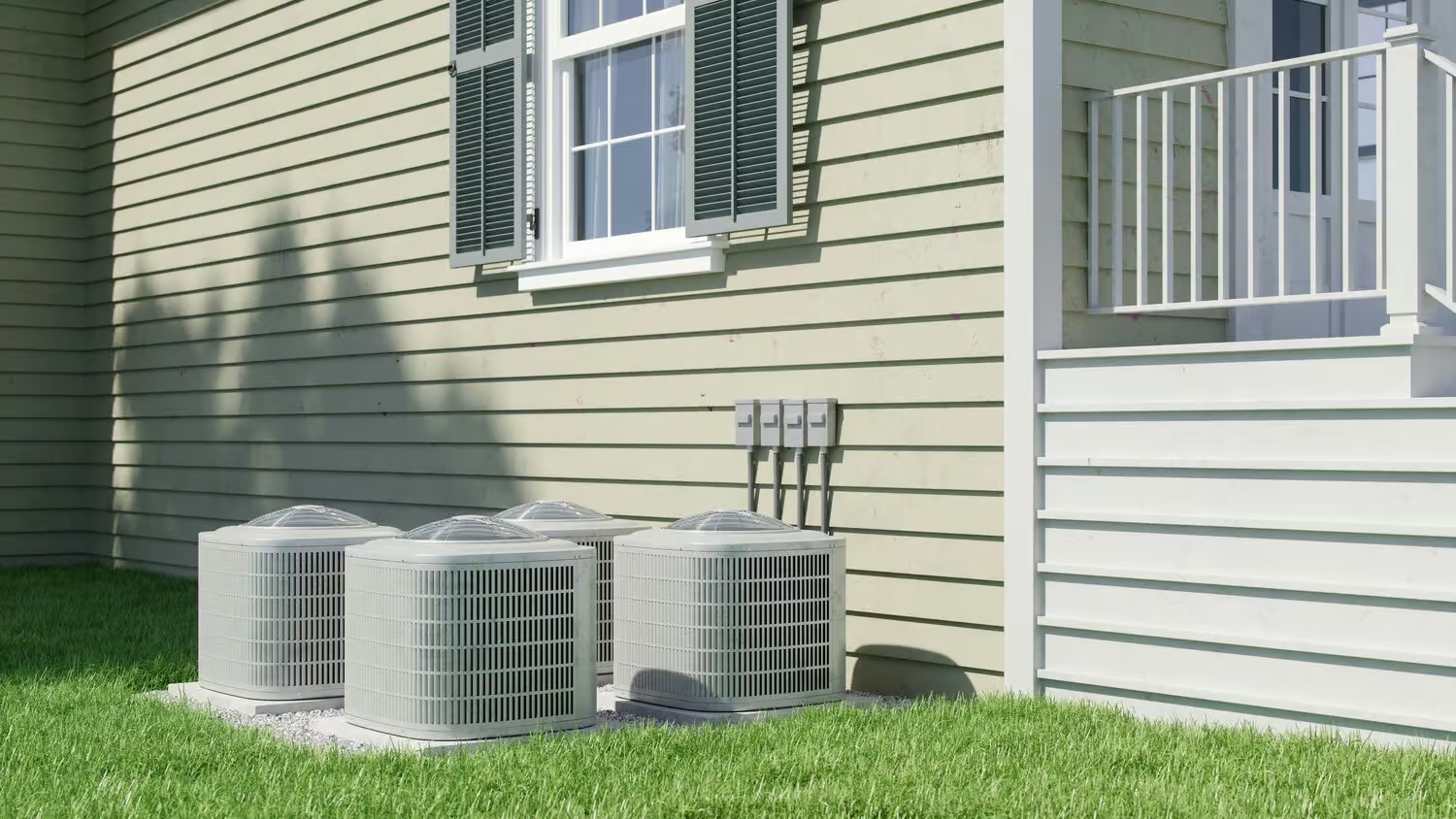
The large metal box sitting outside your home is your air conditioner's outdoor unit. Contrary to what many people think, an air conditioner does not create cool air. It removes heat from inside your home and dumps it outside. The difference is subtle but important.
It does this through a process involving refrigerant, which is a special fluid that circulates between an indoor coil and the outdoor unit. We will explain how this actually works in the next section.
The Heat Pump
A heat pump looks almost identical to an outdoor air conditioner unit, but it can do something an air conditioner cannot: it runs in reverse to heat your home in winter. In summer it works exactly like an AC, pulling heat out of your home. In winter, it extracts heat from the outdoor air (yes, even cold air contains usable heat) and moves it inside.
Heat pumps are becoming increasingly popular because they are highly efficient. Instead of burning fuel to generate heat, they simply move existing heat from one place to another, which uses far less energy.
The Air Handler
In homes with a heat pump, you will often have an air handler indoors instead of a furnace. The air handler contains a blower fan and a coil, and it works alongside the outdoor heat pump unit to circulate conditioned air through your home. Some air handlers also have electric heat strips as a backup for very cold days when the heat pump needs a boost.
Ductwork and Vents
Ductwork is the highway system of your HVAC. It is a network of metal or flexible tubes that runs through your walls, floors, and ceilings to carry conditioned air from your equipment to each room, and then return that air back to be heated or cooled again.
You have two types of vents in your home: supply vents (where air blows out into the room) and return vents (where air gets pulled back to the system). Both are equally important. Blocking return vents with furniture is one of the most common things homeowners do that quietly hurts their system's performance.
The Air Filter
Every HVAC system has at least one air filter, typically located at a return vent or inside the air handler or furnace. Its job is to catch dust, dirt, pet hair, and other particles before they get pulled into the equipment and build up on sensitive components.
A clogged filter is one of the most common causes of HVAC problems. When air cannot flow freely through the filter, your system works harder, uses more energy, and wears out faster. Most filters need to be changed every one to three months depending on the type and how dusty your home is.
How Your HVAC System Works: The Full Picture
Now that you know the parts, here is how they work together as a complete system during a normal cooling cycle on a hot summer day.
It starts with your thermostat. You have it set to 72 degrees, but the temperature in your house climbs to 76 because the sun is beating down on your roof. The thermostat detects this four-degree difference and sends a signal to your air conditioning system to turn on.
Warm air from inside your home gets pulled in through the return vents and passes through the air filter, which catches dust and debris. That filtered air then flows across a cold indoor coil, often called the evaporator coil. This coil is filled with refrigerant that has been cooled to well below room temperature.
Here is the part most people have never heard explained: refrigerant works like a sponge for heat. As the warm room air blows across the cold evaporator coil, the refrigerant inside absorbs heat out of that air. The air coming off the coil is now cool, and the blower fan pushes it through your supply ducts and out into your rooms. That is the cool air you feel coming from your vents.
Meanwhile, the refrigerant is now carrying all that absorbed heat. It travels through a line set (insulated copper tubing that runs between your indoor and outdoor units) to the outdoor unit. There, a compressor pressurizes the refrigerant, which causes it to release all that heat to the outdoors. A big fan on the outdoor unit helps push that heat away from the coil and out into the outside air.
The refrigerant, now cooled back down, travels back inside to absorb more heat, and the cycle repeats continuously until your thermostat reads 72 degrees and shuts the system off.
Heating with a furnace follows a similar air movement pattern, just in reverse. The furnace burns fuel to heat the heat exchanger, the blower pushes air across it, and warm air travels through the same ductwork to heat your rooms. Return vents pull cooler air back to be reheated, and the cycle continues.
How a Heat Pump Heats in Winter
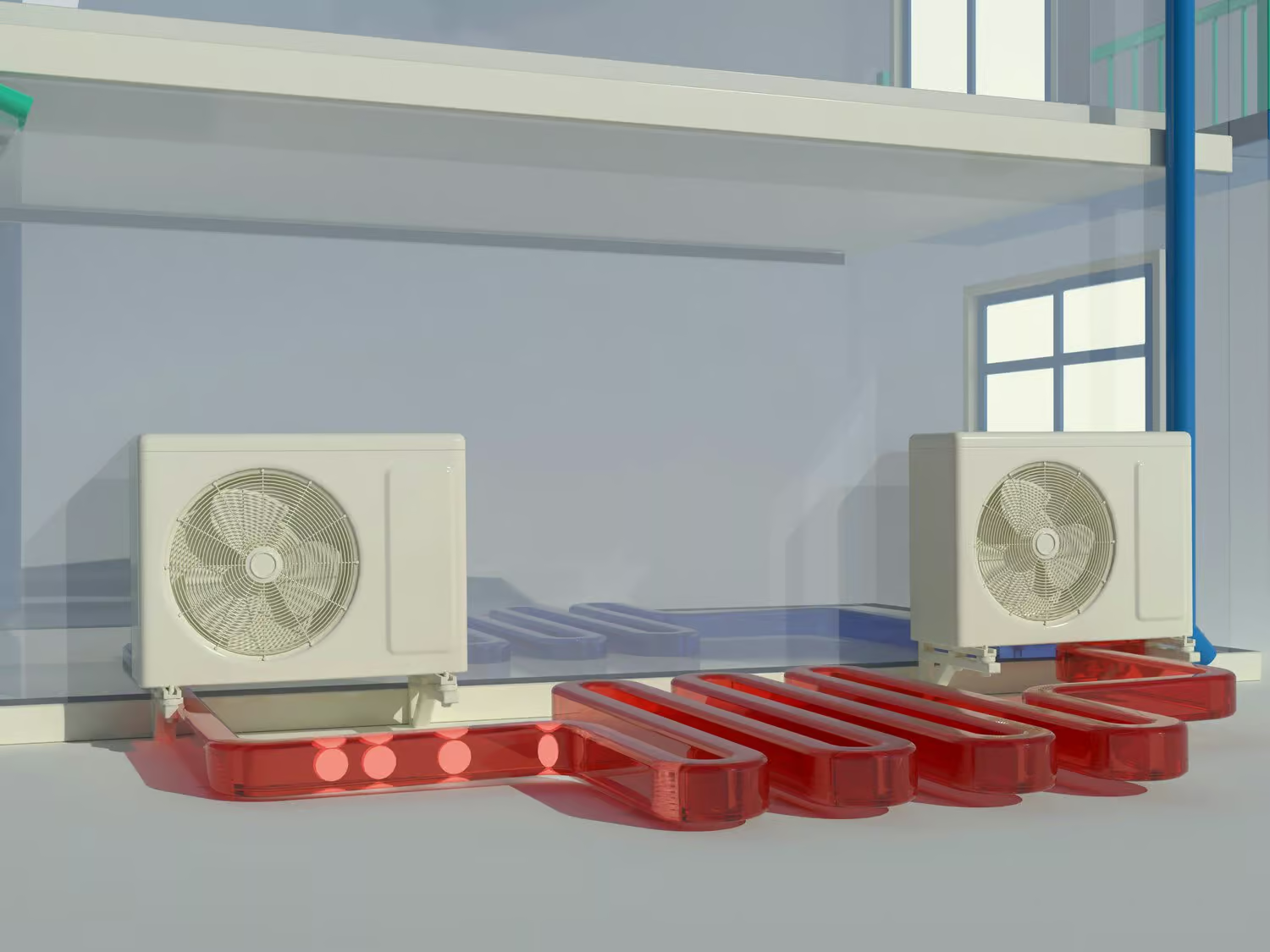
This is the part that surprises most homeowners: a heat pump can pull usable heat out of outdoor air even when it is cold outside. Even at 30 or 40 degrees, the outdoor air contains heat energy. The heat pump extracts it and moves it inside.
In cooling mode, the outdoor coil releases heat. When the heat pump switches to heating mode, a component called a reversing valve switches the direction that refrigerant flows. Now the outdoor coil absorbs heat from outside air, and the indoor coil releases it into your home. The same refrigerant cycle, just running backwards.
When outdoor temperatures drop very low (typically below 35 degrees depending on the system), heat pumps become less efficient. Many systems include backup electric heat strips or are paired with a gas furnace to handle the coldest days. This combination is called a dual fuel system.
What About Ventilation?
Ventilation is the forgotten letter in HVAC. Most homeowners focus entirely on heating and cooling, but the V is what keeps the air inside your home healthy.
Modern homes are built tightly to save energy, which means fresh outdoor air does not naturally flow in and stale indoor air does not flow out the way it used to in older homes. Without proper ventilation, indoor air can accumulate dust, humidity, volatile organic compounds from furniture and cleaning products, and other pollutants. Studies have shown that indoor air is often more polluted than outdoor air.
Your HVAC system manages ventilation in several ways. It constantly circulates air through your filter to remove particles. Many systems include a fresh air intake that brings a controlled amount of outdoor air into the home. More advanced setups use energy recovery ventilators (ERVs) or heat recovery ventilators (HRVs), which exchange stale indoor air for fresh outdoor air without wasting the heating or cooling energy you already put into the indoor air.
Humidity control is also part of ventilation. Your air conditioner naturally removes some humidity from the air as a byproduct of cooling. In very humid climates, a standalone dehumidifier can be added to the system. In very dry climates, a whole-home humidifier can attach directly to your ductwork to add moisture during heating season, which makes your home more comfortable at lower thermostat settings.
Common Homeowner Questions Answered
Why is upstairs always hotter than downstairs?
Heat rises, and so does the hot air that collects near your ceiling. Upper floors are also closer to a hot roof and typically have more direct sun exposure. Most single-zone systems are designed around one thermostat, which measures temperature in one spot. If that thermostat is downstairs, the system shuts off when the downstairs is comfortable, but the upstairs may still be warm. Zoning systems and variable-speed equipment can help balance this significantly.
How long should my AC run per cycle?
A properly sized AC system should run for about 15 to 20 minutes per cycle on a hot day, cycling on and off several times per hour. If your system runs for only a few minutes before shutting off (called short cycling), it is usually a sign that the equipment is oversized for your home, there is a refrigerant issue, or the thermostat is malfunctioning. If it runs almost continuously without reaching your set temperature on a reasonably hot day, the system may be undersized, low on refrigerant, or the filter may be severely clogged.
Why does my house feel humid even when the AC is running?
Air conditioning removes humidity as a byproduct of cooling. If the system is oversized and short cycling, it cools the air quickly but does not run long enough to remove adequate moisture. A system running on a low fan speed for longer cycles actually does a better job of dehumidifying. If humidity is a persistent problem, a whole-home dehumidifier or a variable-speed system can make a significant difference.
What does it mean when my system "runs all night"?
On a very hot or very cold day, it is normal for your system to run for extended periods. But if it struggles to reach your set temperature even on mild days, something is wrong. Common culprits include a dirty filter, refrigerant leak, aging equipment, or ductwork with leaks letting conditioned air escape into unconditioned spaces like an attic or crawlspace.
Why Regular Maintenance Matters
Your HVAC system has a lot of moving parts, literally. Blower motors, compressors, fans, and electrical components all wear over time. The difference between a system that lasts 12 years and one that lasts 20 years often comes down to how consistently it was maintained.
Here is what professional maintenance typically includes and why each step matters:
- Checking refrigerant levels: Too little refrigerant and your system cannot cool effectively. Too much and you risk damaging the compressor, which is the most expensive component in your outdoor unit.
- Cleaning the evaporator and condenser coils: Dirty coils reduce the system's ability to transfer heat, making it work harder to achieve the same result.
- Inspecting the heat exchanger: A cracked heat exchanger on a furnace can allow carbon monoxide to enter your living space.
- Lubricating moving parts and checking electrical connections: Loose connections and dry bearings are common causes of premature equipment failure.
- Checking airflow and duct integrity: Leaky ducts can waste 20 to 30 percent of the conditioned air your system produces, most of which ends up in your attic or crawlspace instead of your rooms.
Most HVAC professionals recommend a tune-up twice a year: once in spring before cooling season, and once in fall before heating season. The cost of a maintenance visit is a small fraction of what a major repair or early replacement would cost.
Signs Your HVAC System Needs Attention
You do not need to understand every technical detail of your system to recognize when something is off. Here are the signs worth paying attention to:
- Rooms that used to be comfortable are now consistently too hot or too cold
- Your energy bills are noticeably higher than the same time last year without a clear reason
- The system makes new noises: banging, squealing, rattling, or grinding
- You notice a burning smell when the heat first kicks on (some dust burning off is normal the first time of the season, but a persistent smell is not)
- The system cycles on and off much more frequently than usual
- There is ice forming on the outdoor unit or on the refrigerant lines
- Your home feels more humid than normal during cooling season
None of these necessarily mean you need to replace your entire system. Many are straightforward to diagnose and fix. The key is not ignoring them, because small problems have a way of becoming expensive ones.
Ready to Schedule a Service or Ask an Expert?
Understanding your HVAC system is the first step. Keeping it running well is the next one. Whether you need a routine tune-up, have noticed something that does not seem right, or are thinking about replacing aging equipment, our team is here to help.
We work with homeowners every day to diagnose problems, recommend the right solutions, and keep systems running efficiently year-round. No technical background required on your part. That is what we are here for.
Give us a call or schedule a service appointment online today. A well-maintained HVAC system is one of the best investments you can make in your home's comfort and your household's long-term budget.