


Thermostat Not Turning the Heat On in Colorado? A Denver HVAC Technician’s Step-by-Step Guide
December 18, 2025
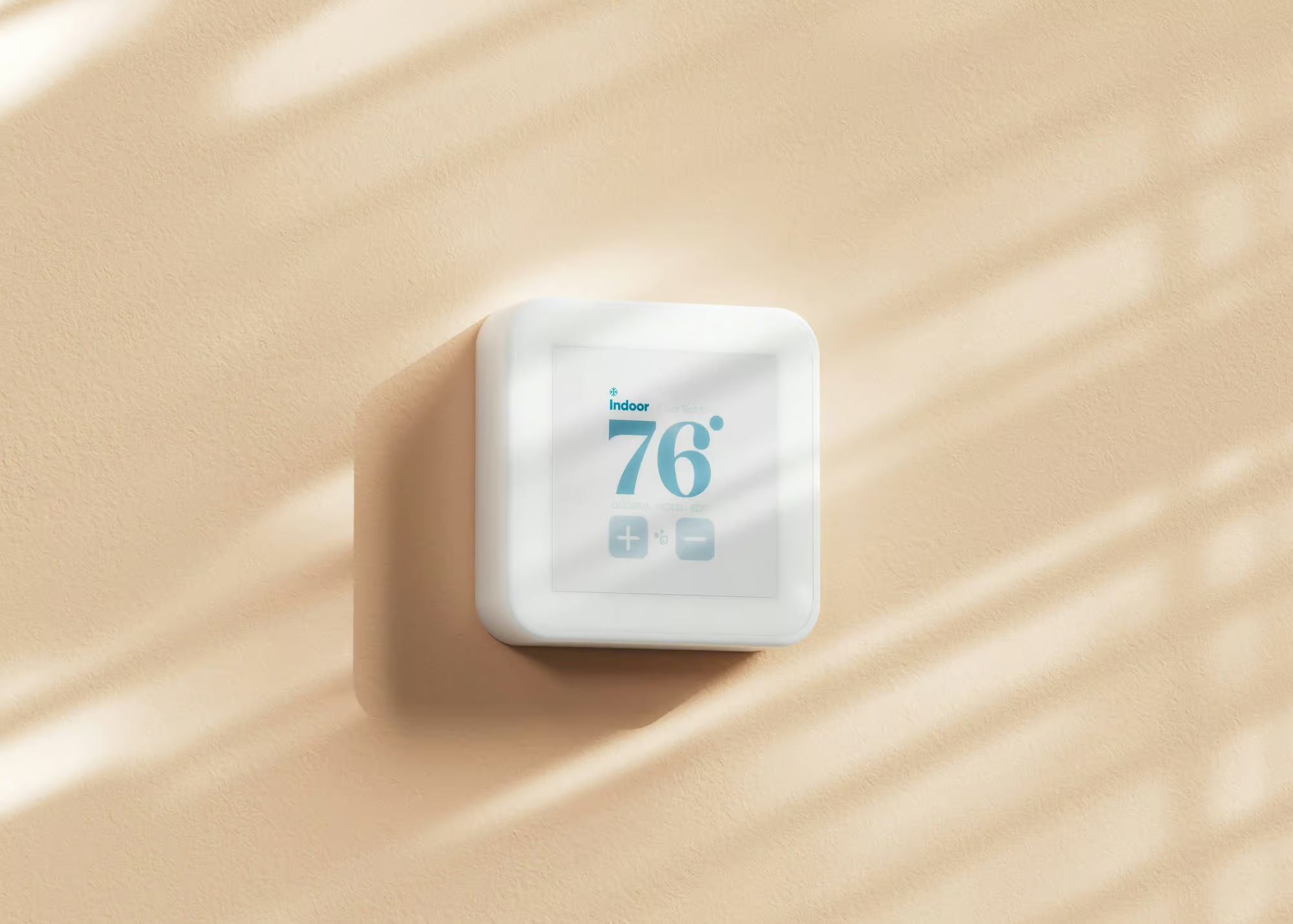
When your thermostat says it is calling for heat but your home stays cold, frustration sets in quickly, especially during a Colorado cold snap. Denver homeowners often experience sudden no-heat situations due to rapid temperature swings, aging equipment, or thermostat compatibility issues that are easy to overlook.
For us, thermostat-related no-heat calls are among the most common winter service requests we handle across the Denver metro area. The good news is that some causes are simple to identify, while others signal a deeper issue that requires professional attention.
This guide walks you through how to diagnose a thermostat that will not turn the heat on, what is safe to check yourself, and when it is time to call an HVAC technician to protect your comfort and safety.
First: Is the Thermostat Actually Calling for Heat?
Before troubleshooting the furnace itself, confirm that the thermostat is truly sending a heat signal.
Quick checks that take under two minutes:
- Set the thermostat to Heat, not Auto or Cool
- Raise the temperature at least 5 degrees above the current room temperature
- Wait 2 to 5 minutes for the system to respond
If nothing happens, move on to the sections below.
Why Thermostat Issues Are Common in Colorado Homes
Colorado homes experience conditions that stress heating systems more than many parts of the country:
- Large daily temperature swings cause frequent system cycling
- Many Denver-area homes still use older furnaces paired with newer thermostats
- High altitude affects pressure switches, ignition timing, and safety sensors
- Dry winter air increases static buildup and dust accumulation
These factors make thermostat communication problems more likely, even when the furnace itself is in good condition.
1. Incorrect Settings or Smart Thermostat Scheduling Conflicts
This is one of the most frequent causes of no-heat calls we see in the Denver area.
What to verify:
- System mode is set to Heat
- Fan is set to Auto, not On
- Temperature setting is higher than the room temperature
Smart thermostat warning:
Wi-Fi thermostats can override manual changes due to schedules, learning algorithms, or lost internet connectivity. A thermostat may appear to accept a temperature change but never send the command to the furnace.
If your smart thermostat recently updated, lost Wi-Fi, or was installed without professional setup, it may be blocking heat calls without showing an error.
2. Low Batteries or Inconsistent Thermostat Power
Many thermostats rely on batteries or a low-voltage power connection from the furnace. When power becomes unstable, the thermostat may appear functional but fail to activate the heating system.
Common signs:
- Screen is dim, flickering, or slow to respond
- Heat works intermittently
- Battery warning appears briefly, then disappears
What to do:
- Replace batteries with brand-new alkaline batteries
- Avoid mixing old and new batteries
- If the thermostat uses a common wire (C-wire), check that it is firmly connected
In Colorado winters, battery performance drops faster due to colder indoor conditions near exterior walls.
3. Dirty Air Filter Triggering a Safety Shutdown
Modern furnaces include safety sensors that shut the system down when airflow becomes restricted.
Why this matters:
- A clogged filter causes the furnace to overheat
- The high-limit switch shuts off burners to prevent damage
- The thermostat keeps calling for heat, but the furnace refuses to run
Denver homeowner tip:
During peak heating season, filters often need replacement every 30 to 60 days, especially in homes with pets or older ductwork.
This is one of the most common causes of “thermostat not turning heat on” that is not actually a thermostat failure.
4. Tripped Furnace Breaker or Shutoff Switch
If the thermostat is working but the furnace never starts, power may be interrupted.
Steps to check:
- Inspect the electrical panel for a tripped furnace breaker
- Look for the furnace power switch, often mounted on a nearby wall
- Confirm the service switch near the furnace is turned on
If the breaker trips repeatedly, stop resetting it. Repeated trips often indicate motor failure, electrical shorting, or control board problems.
5. Furnace Safety Lockout or Fault Codes
If your thermostat is working but the furnace attempts to start and then shuts down, the system may be in safety lockout.
Possible causes include:
- Flame sensor contamination
- Pressure switch failure (common at altitude)
- Ignition failure
- Exhaust or intake blockage from snow or ice
Most furnaces display blinking LED fault codes that identify the problem. These codes are invaluable to technicians but are often missed by homeowners.
At this point, continued DIY troubleshooting is not recommended.
6. Thermostat Wiring or Compatibility Problems
Thermostat wiring issues are increasingly common as homeowners upgrade to smart thermostats without confirming compatibility.
Common problems we see:
- Missing C-wire causing unstable power
- Loose low-voltage wiring behind the thermostat
- Thermostat not designed for multi-stage or variable-speed furnaces
- Incorrect configuration for gas furnaces vs heat pumps
A thermostat can power on but fail to communicate properly, leading homeowners to assume the furnace is broken when the issue is actually at the control level.
When to Call a Professional
Call a licensed HVAC technician immediately if:
- The furnace will not start despite proper thermostat settings
- The breaker trips repeatedly
- You hear grinding, banging, or clicking noises
- You smell gas or burning odors
- The thermostat works but the furnace locks out repeatedly
In Colorado winters, delayed repairs can lead to frozen pipes, water damage, and unsafe indoor conditions so please call as soon as you can.
Preventing Thermostat and Heating Problems Before Winter Hits
The best way to avoid no-heat emergencies is preventative maintenance.
Recommended steps for Denver-area homes:
- Schedule annual furnace maintenance before cold weather
- Replace filters regularly throughout the heating season
- Confirm thermostat compatibility when upgrading equipment
- Keep furnace intake and exhaust pipes clear of snow and debris
According to the U.S. Department of Energy, regular HVAC maintenance improves efficiency, extends system life, and reduces unexpected breakdowns during extreme weather.
Frequently Asked Questions
Why does my thermostat say it is heating, but nothing happens?
This usually means the thermostat is calling for heat, but the furnace is not responding due to a safety lockout, power issue, or internal failure.
Can a thermostat fail even if the screen works?
Yes. Displays can function while internal relays or communication circuits fail.
Is a smart thermostat always better?
Smart thermostats offer convenience, but only when properly installed and configured for your specific heating system.
How do I know if the problem is the thermostat or the furnace?
If the thermostat has power and settings are correct, but the furnace never starts or shuts down quickly, the issue is likely within the furnace itself.
Trusted Heating Help for Colorado Homes
When your thermostat will not turn the heat on, guessing can cost time, money, and comfort. DenTech Heating & Air Conditioning provides professional heating diagnostics, furnace repair, thermostat installation, and preventative maintenance throughout the Denver metro area and many other cities and neighborhoods around Denver.
If your home is cold and troubleshooting has not solved the issue, our experienced technicians are ready to help restore safe, reliable heat.